Skip to content

A DevOps idle tycoon. One used server grows into a whole platform.

It Works on My Machine

Your first server is used hardware. It still works. Most of the time.

One used server. A bar that turns amber, then red. Build the platform, survive the incident, and unlock the monitoring that shows you the next one coming.

App Storenot yet publishedGoogle Playnot yet publishedRobloxa version is planned
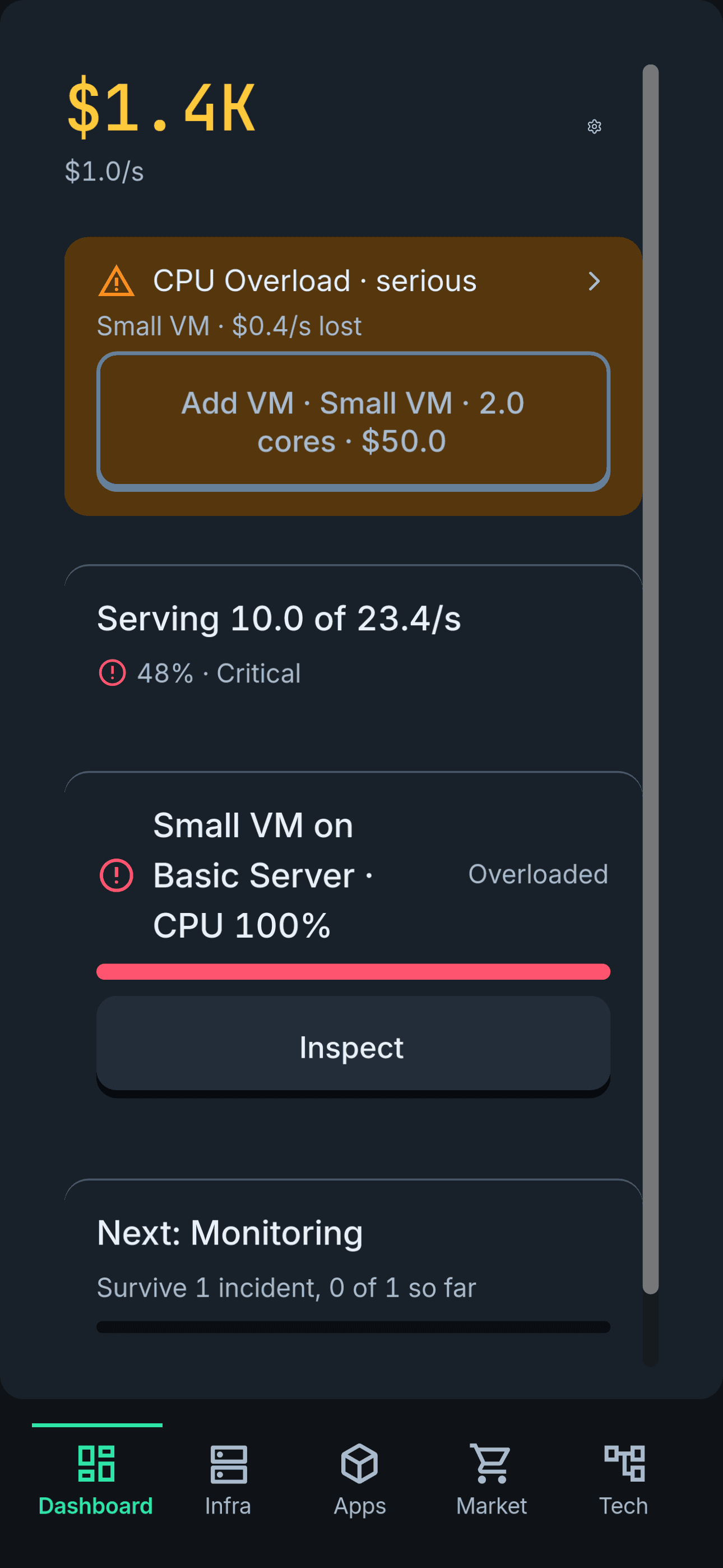
The Dashboard: cash per second, users served, reliability, and any live alert.

It Works on My Machine is an idle tycoon game about running infrastructure. You buy hardware, divide it into virtual machines, deploy apps onto them, and watch users arrive. The users bring revenue. The revenue buys more hardware. The bigger the platform gets, the more ways it can break.

“It works on my machine” is what a developer says when the code runs on their own computer and nowhere else. Here, it is your machine. All of it.

Build the platform

Buy a server. Divide it into virtual machines. Deploy a web app, an API and a database. Install the dependencies they need. Every machine has processor cores, memory and storage. Every app needs a share of each. So every purchase is a real decision: more capacity, or better reliability, or lower operating costs.
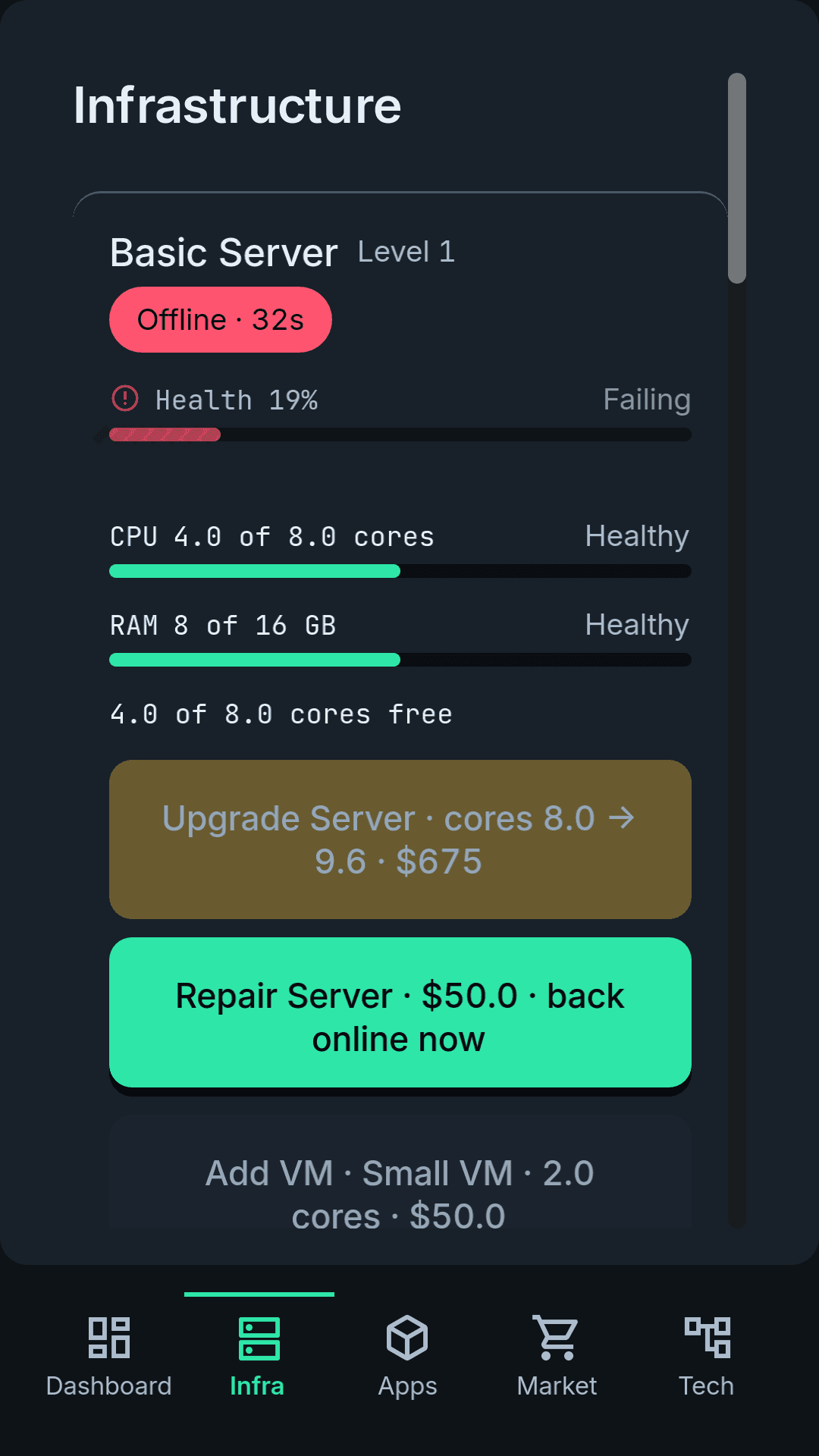
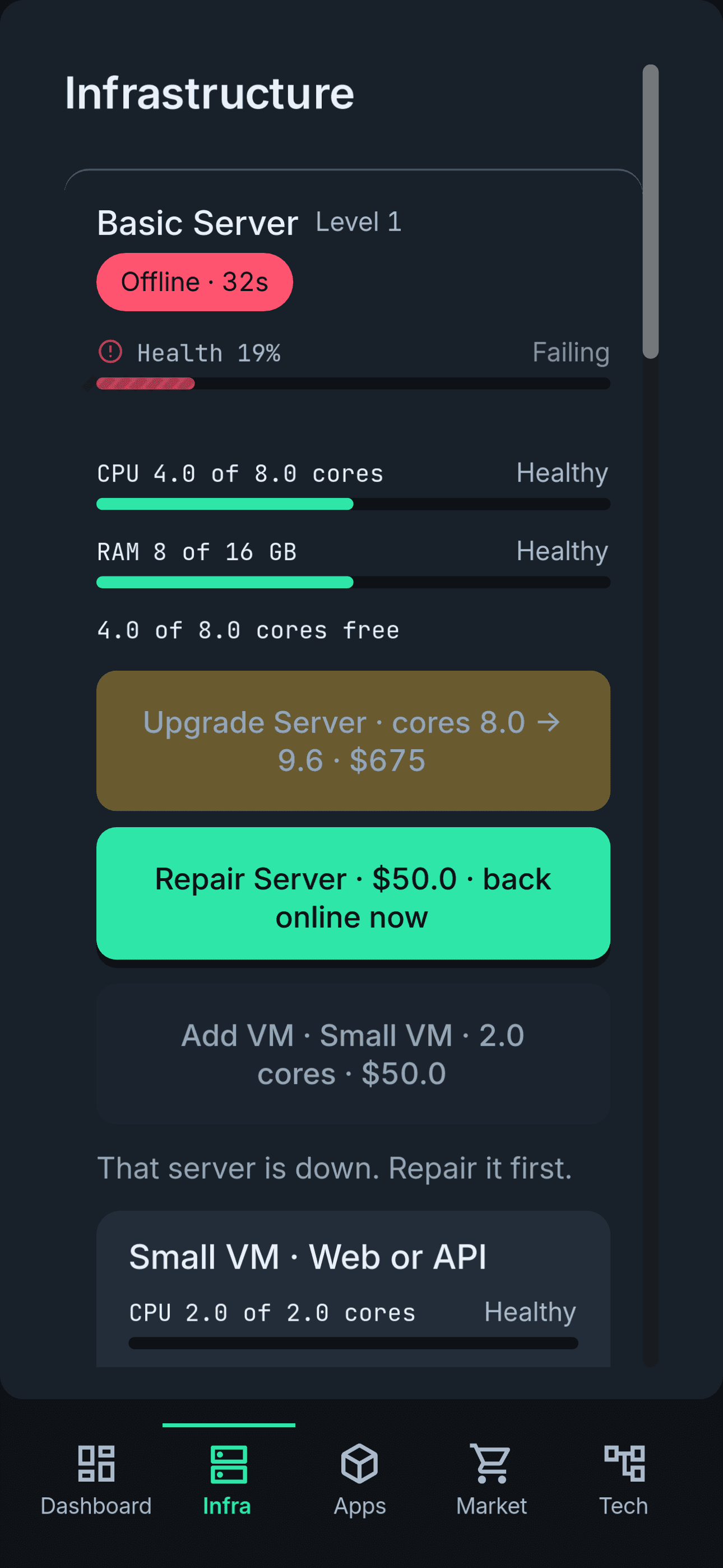
The Infrastructure screen: a server card with CPU, RAM and storage bars, and the VMs on it.

Watch the bars

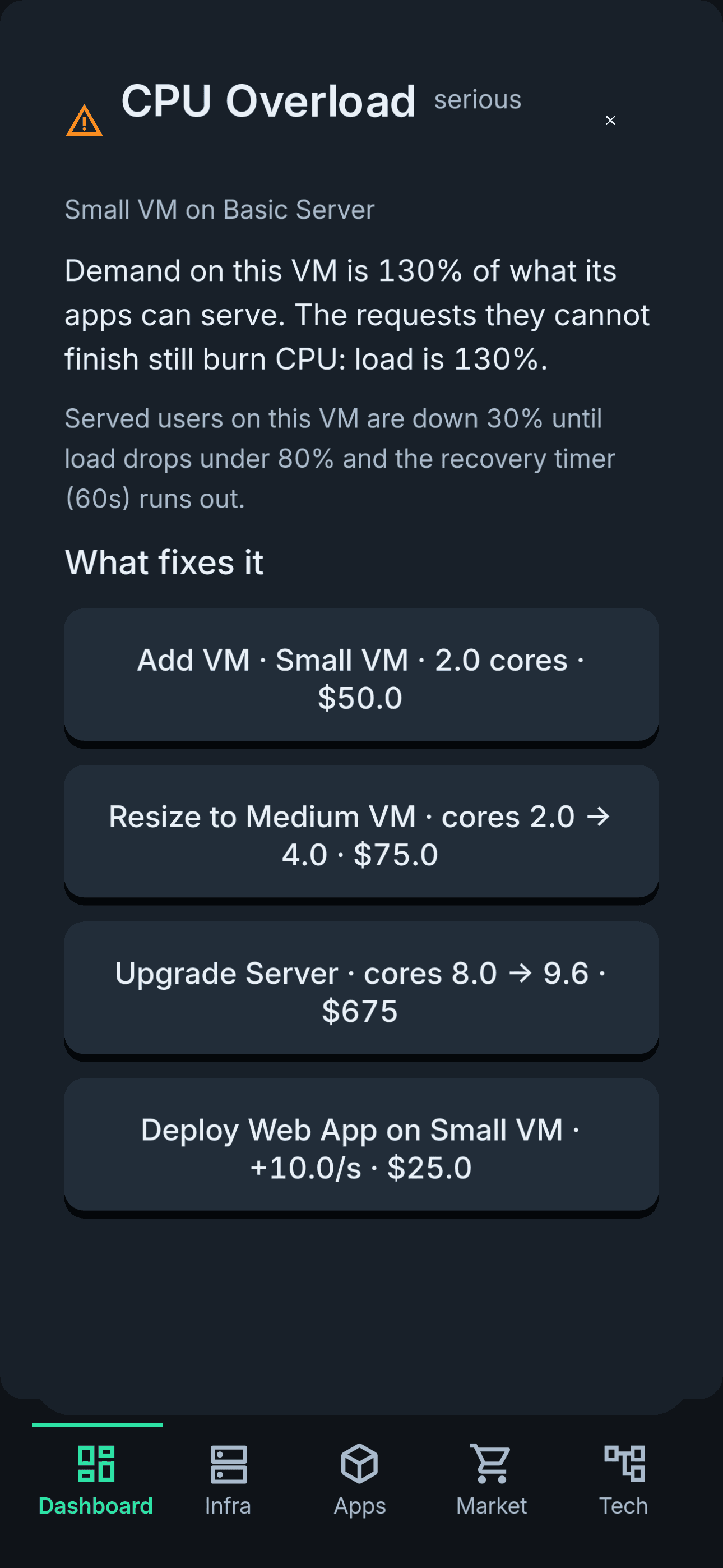
You can see load before it becomes a problem. A virtual machine at 70% turns amber. At 90% it turns red. Held there long enough, it becomes an incident: CPU Overload, RAM Pressure, Disk Full or Server Failure. Each one tells you what happened in one sentence, with the numbers in it.

Disk Full is the one that arrives while everything looks fine. Log files grow with the users you serve. A busy machine fills its own disk, and a quiet one never does.

An incident sheet explaining what happened, with the live numbers and the buttons that fix it.

Climb the tech tree

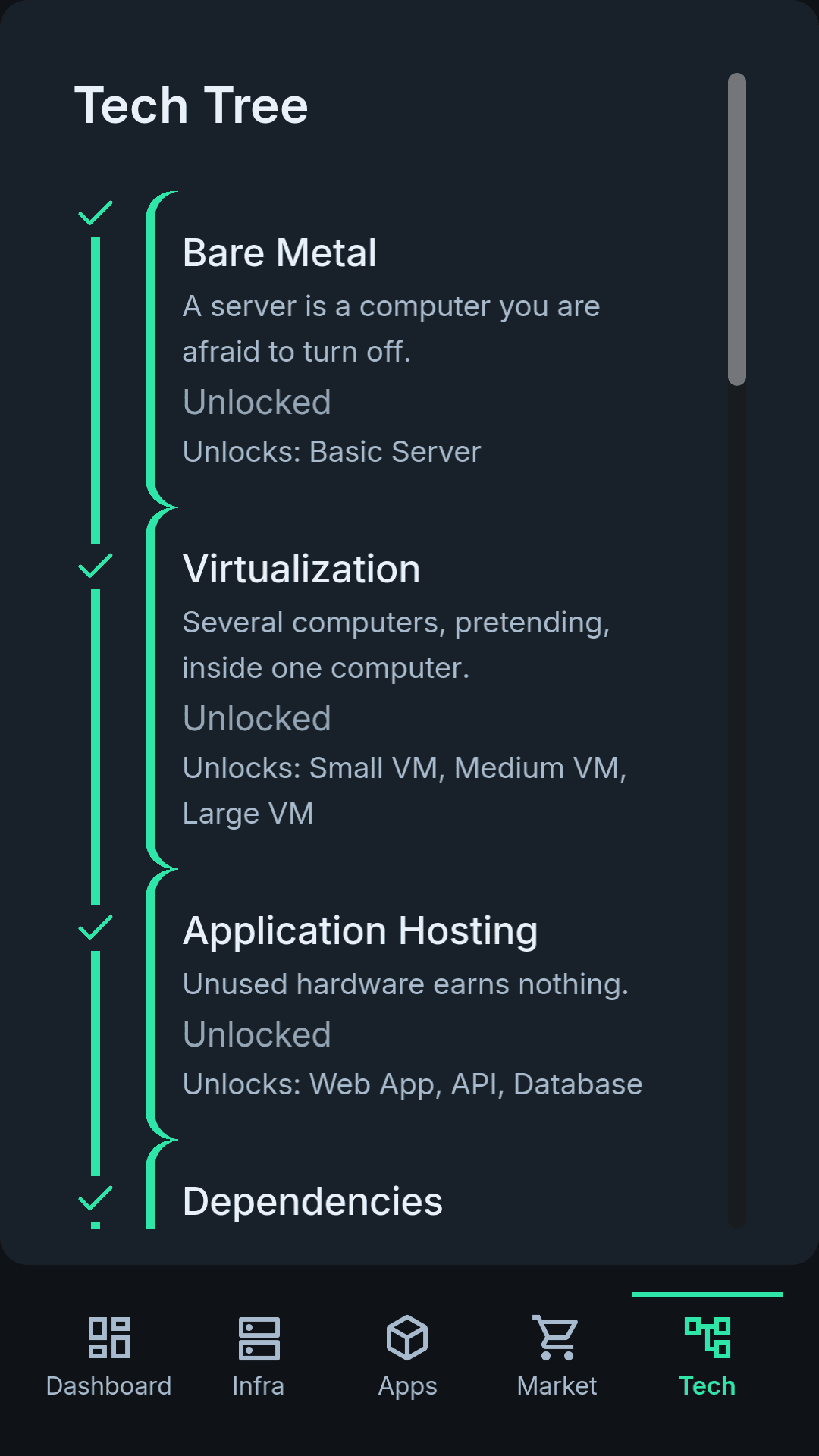
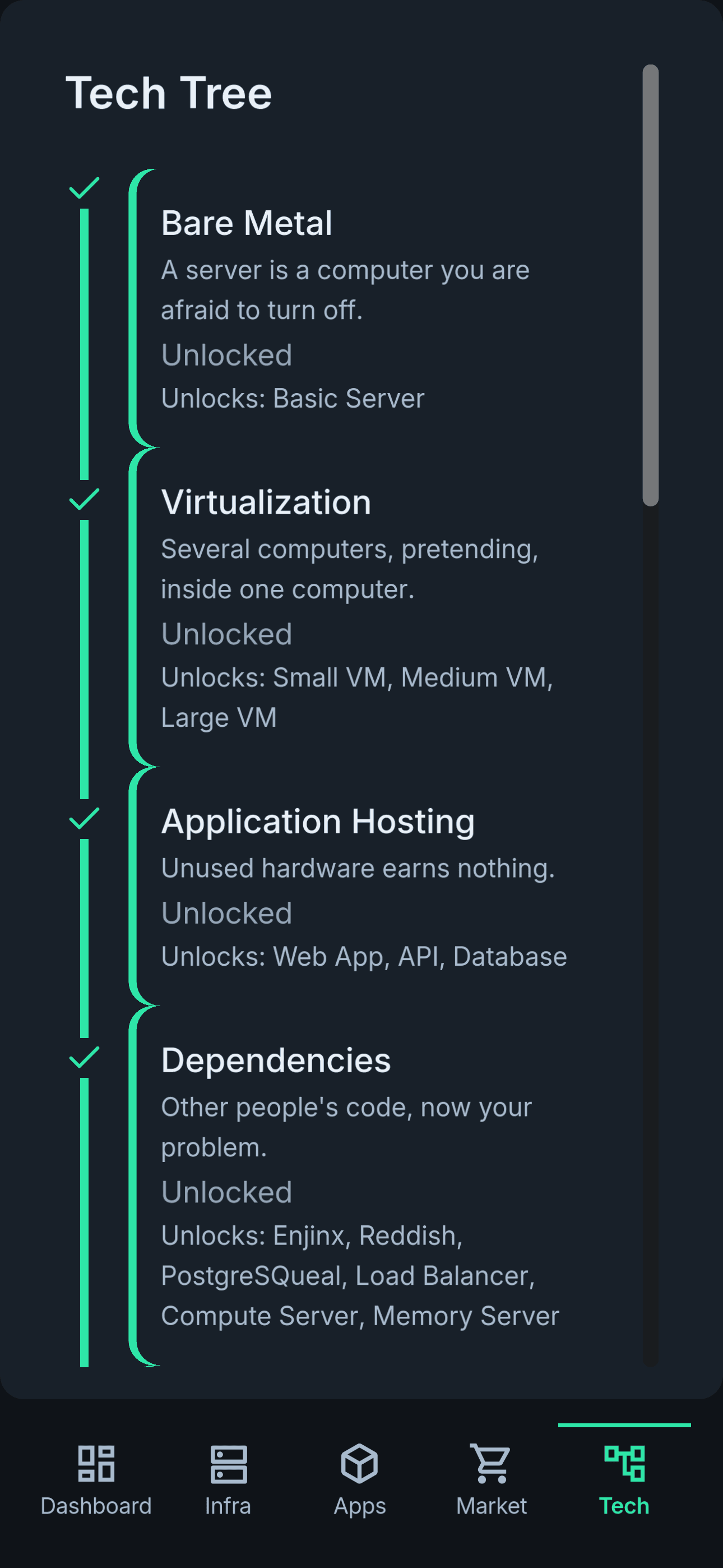
Nine tiers, and every one of them changes a rule. Virtualization. Application hosting. Monitoring, because you cannot fix what you cannot see. Then the four that sysadmins and developers already know by name. Continuous delivery deploys new apps for you, but only while demand is ahead of capacity. Containers move a running app to another machine without restarting it. Infrastructure as code plans a whole stack, then shows you the cost and every refusal before it applies anything. Orchestration moves work off an overloaded machine while you are busy somewhere else.

None of them is a plain multiplier. Each one is a decision about how much of the work you hand to the machine.

The Tech Tree screen: nine tiers, the reached ones edged in green and the next one outlined.

It keeps earning while you are away

Close the app and the platform keeps serving users. Come back to a summary of what it earned and what it survived.

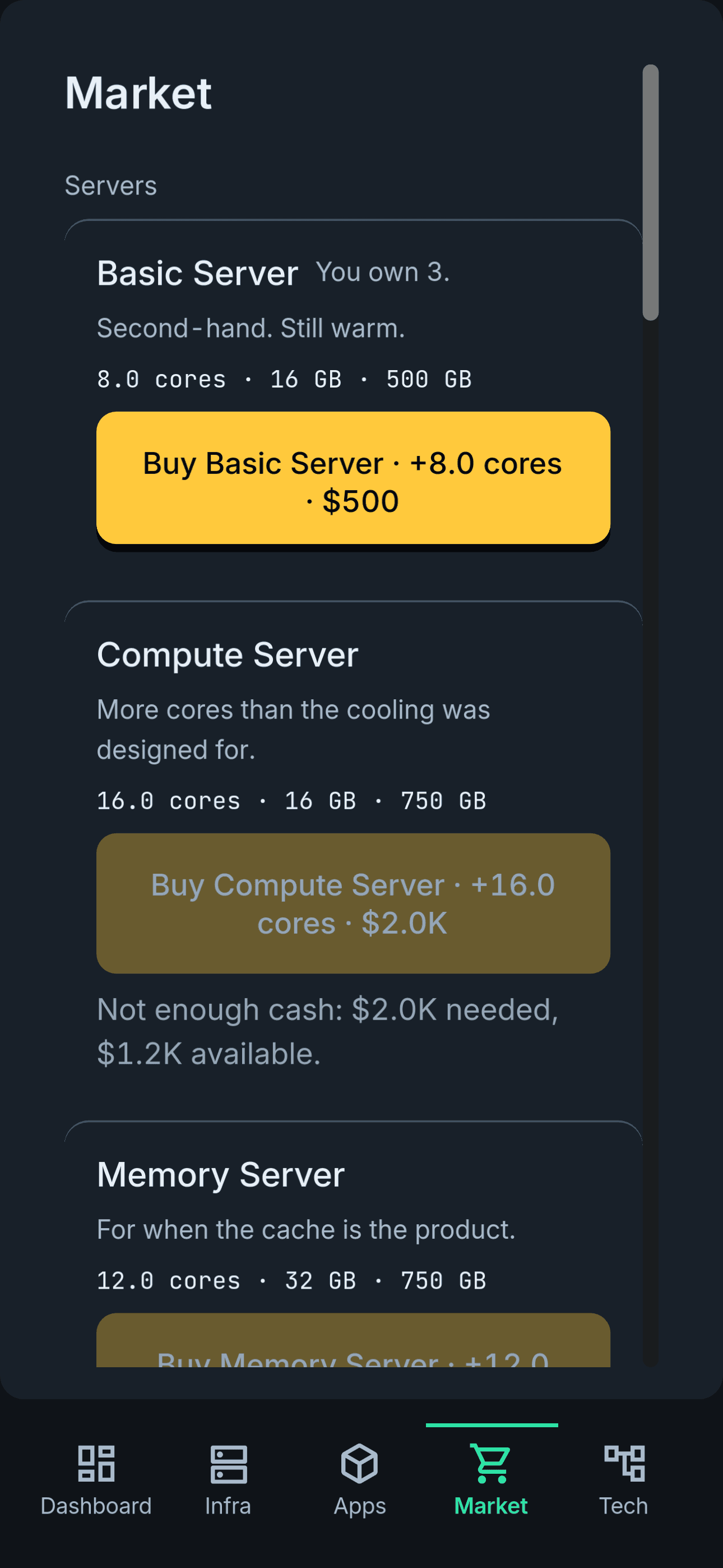
The Market screen, showing what each purchase changes before you buy it.

Every screen

Real captures at store sizes, rendered by the same harness that makes the listing images.

Made for anyone whose job is keeping other people’s software running.

App Storenot yet publishedGoogle Playnot yet publishedRobloxa version is planned